
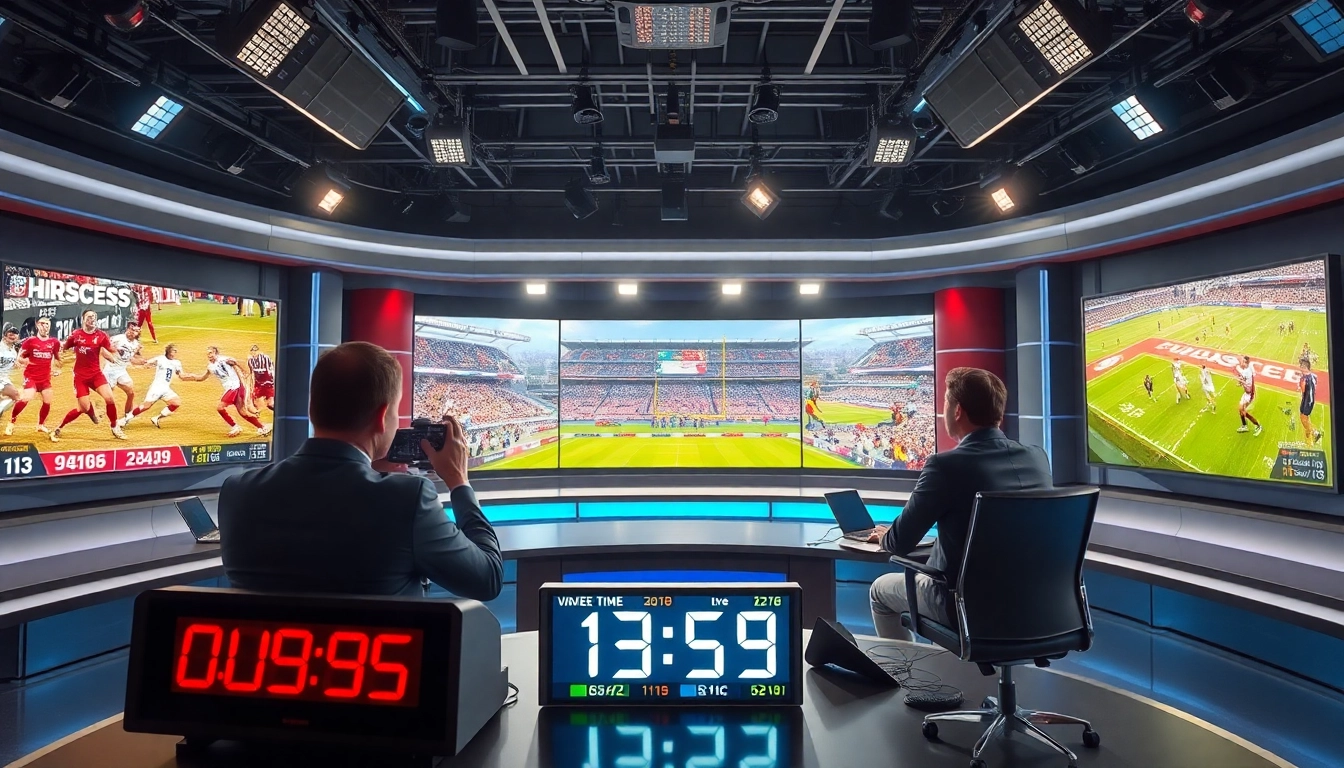
Understanding Sports Broadcasting
What is Sports Broadcasting?
Sports Broadcasting refers to the transmission of sporting events through various mediums, including television, radio, and online platforms. It serves as a crucial connector between sporting organizations and fans, providing live coverage, commentary, and analysis of events. This industry has grown significantly due to technological advancements, which have enhanced the viewing experience and expanded its reach. The world of Sports Broadcasting encompasses not only the event broadcasts but also the myriad ways sports are discussed, analyzed, and marketed across different platforms. Organizations engaged in Sports Broadcasting utilize various strategies to attract and retain audiences while delivering high-value content to sponsors.
The Evolution of Sports Broadcasting
The history of Sports Broadcasting can be traced back to the early 20th century when radio broadcasts allowed sports fans to follow their favorite teams and players regardless of geographical barriers. The advent of television in the 1950s revolutionized this sector by introducing visual elements that enhanced how events were experienced. Over the decades, we have seen major milestones such as the first live sports broadcast of a baseball game, the birth of cable sports channels, and the transition to digital platforms that brought sports content into the streaming age. Each phase of evolution has contributed to the complex ecosystem that we see today, combining traditional broadcasts with cutting-edge technology like smart devices and apps.
Importance of Live Coverage
Live coverage is central to the appeal of Sports Broadcasting. It not only generates excitement and engagement among fans but also significantly impacts viewership ratings and advertising revenues. The immediacy of live sports creates a sense of urgency and connection, allowing viewers to feel part of the action. Moreover, live events offer unique opportunities for sponsorship and partnership, as brands look to associate themselves with high-excitement moments that resonate with audiences. This essence of live coverage is why organizations invest heavily in obtaining broadcasting rights for popular sports leagues and events.
Current Trends in Sports Broadcasting
Impact of Streaming Services
The rise of streaming services has dramatically altered the landscape of Sports Broadcasting. Platforms such as Netflix, Amazon Prime, and dedicated sports streaming services have changed how audiences consume content, moving away from traditional cable subscriptions to more flexible, on-demand viewing options. This shift has become especially pronounced as consumers seek tailored experiences and the ability to watch sports on their terms, whether through smartphones, tablets, or smart TVs. You can read more about trends in Sports Broadcasting that highlight how these platforms are reshaping fan engagement and content accessibility.
Interactive Fan Engagement
Modern Sports Broadcasting is increasingly incorporating interactive elements that allow fans to participate in the experience beyond passive viewing. This includes social media engagement, real-time polls, and augmented reality features that enhance the broadcast. The goal is to create a two-way dialogue where fans can express their opinions, make predictions, and engage directly with broadcasters and teams. These interactive features not only keep fans invested in the content but also add valuable data points that organizations can analyze for marketing and engagement strategies.
Adoption of Augmented Reality
Augmented reality (AR) is becoming an influential tool in the Sports Broadcasting industry, offering unique storytelling opportunities and immersive experiences for fans. With AR, broadcasters can overlay graphics and information onto live action, enriching the audience’s understanding and enjoyment of the game. For instance, AR can be used to display player stats, real-time game analytics, and even provide enhanced replays that allow viewers to engage with the action on a deeper level. As AR technology continues to evolve, its integration into Sports Broadcasting will likely expand, pushing the boundaries of how sports are presented.
Technologies Revolutionizing Sports Broadcasting
High-definition and 4K Streaming
The move towards high-definition (HD) and ultra-high-definition (4K) streaming has set new standards in Sports Broadcasting. These technologies improve image quality dramatically, allowing viewers to see details that were previously undetectable in standard formats. The clarity of HD and 4K not only enhances the viewing experience but also attracts advertisers looking to maximize their impact during broadcasts. As technology matures, 8K streaming is on the horizon, promising even more vivid, lifelike imagery that will redefine how fans experience sports.
Use of Drones in Coverage
Drones are becoming increasingly prominent in the Sports Broadcasting landscape, providing unique aerial perspectives that enhance coverage. These unmanned aerial vehicles can capture stunning footage that was once only possible through expensive helicopter services. This new angle of viewing allows broadcasters to tell better stories, highlight specific plays, and provide a broader overview of the game. Moreover, drones offer flexibility that traditional coverage methods lack, enabling broadcasters to adjust on-the-fly to capture critical moments in high-stakes games.
Artificial Intelligence in Analysis
Artificial intelligence (AI) is revolutionizing the way broadcasters analyze and present sports data. AI can quickly process vast amounts of statistics, player performance data, and historical game information to offer actionable insights that improve commentary and viewer understanding. For instance, AI algorithms can create predictive models that analyze past performances and suggest basic game tactics, enriching pre-game and post-game discussions. The integration of AI streamlines operations for broadcasters, allowing analysts to focus on creative content delivery rather than data crunching.
Challenges in Sports Broadcasting
Maintaining Viewer Interest
While the advancements in technology continue to provide new ways to engage audiences, one of the biggest challenges remains keeping viewers interested. The continuous influx of content options, including non-sporting related entertainment, forces broadcasters to develop innovative strategies that retain the attention of their fans. This could involve collaborating with influencers, creating behind-the-scenes content, or developing narrative arcs that keep viewers invested throughout the season. Understanding audience preferences through data analysis is now more critical than ever for maintaining viewership.
Content Licensing Issues
The world of Sports Broadcasting often grapples with complex licensing agreements. Rights to broadcast games are typically negotiated years in advance, which can result in battles between networks and leagues over territorial coverage and pricing. These issues can restrict access to certain games and leave fans frustrated if they cannot view their favorite sports teams. Broadcasters must navigate these complexities while looking for innovative ways to provide coverage that does not violate contractual agreements or lead to legal disputes.
Technological Dependency Risks
As Sports Broadcasting becomes increasingly reliant on advanced technology, the risks associated with technological dependency grow. Dependence on high-tech solutions may lead to vulnerabilities, such as data breaches, equipment failures, or interruptions in service caused by technical glitches. Broadcasters must ensure robust contingency plans and maintenance schedules are in place to mitigate risks. Regular updates and training for staff on the latest technologies are also crucial to maintaining a seamless operational environment.
Future Predictions for Sports Broadcasting
Virtual Reality Experiences
Virtual reality (VR) is poised to revolutionize Sports Broadcasting by allowing fans to immerse themselves directly into the action. With VR technologies, fans can experience games as if they were in the stadium, providing an unparalleled sense of presence. broadcasters can develop unique experiences that allow viewers to choose different perspectives of the game or interact with other fans through virtual viewing parties. As VR technology becomes more affordable and widespread, we can expect to see it become a staple in the Sports Broadcasting landscape.
Blockchain in Broadcasting Rights
Blockchain technology presents a disruptive opportunity for managing broadcasting rights more transparently and securely. By utilizing decentralized networks, broadcasters can mitigate issues related to content ownership and copyright infringements, ensuring that the appropriate stakeholders are compensated fairly. Additionally, blockchain can streamline the process of acquiring and sharing broadcasting rights across different platforms, paving the way for a more equitable sports marketing ecosystem. This approach could eliminate many licensing barriers currently faced by broadcasters.
Sustainability in Broadcasting Operations
As environmental consciousness grows, the demand for sustainable broadcasting practices is becoming increasingly important. Organizations in the Sports Broadcasting sector are under pressure to minimize their carbon footprint by adopting more eco-friendly technologies and operational strategies. This may include utilizing solar power for studios, reducing waste from productions, and emphasizing sustainability in their messaging to audiences. Moving towards a sustainable future not only reflects social responsibility but can also become a unique selling point for broadcasters looking to differentiate themselves in a crowded market.
Frequently Asked Questions
What is the role of Sports Broadcasting?
Sports Broadcasting connects fans with live sporting events, providing commentary, analysis, and entertainment across various platforms.
How has technology impacted Sports Broadcasting?
Technology has revolutionized Sports Broadcasting through HD and 4K streaming, augmented reality, drones, and AI data analysis.
What challenges does the industry face?
Maintaining viewer interest, navigating content licensing issues, and mitigating risks associated with technological dependency.
What future trends can we expect?
Future trends include virtual reality experiences, blockchain for broadcasting rights, and a shift towards sustainable broadcasting operations.
How do streaming services change the landscape?
Streaming services have shifted how audiences consume sports, favoring on-demand content and personalized viewing experiences over traditional cable.
Über den Autor